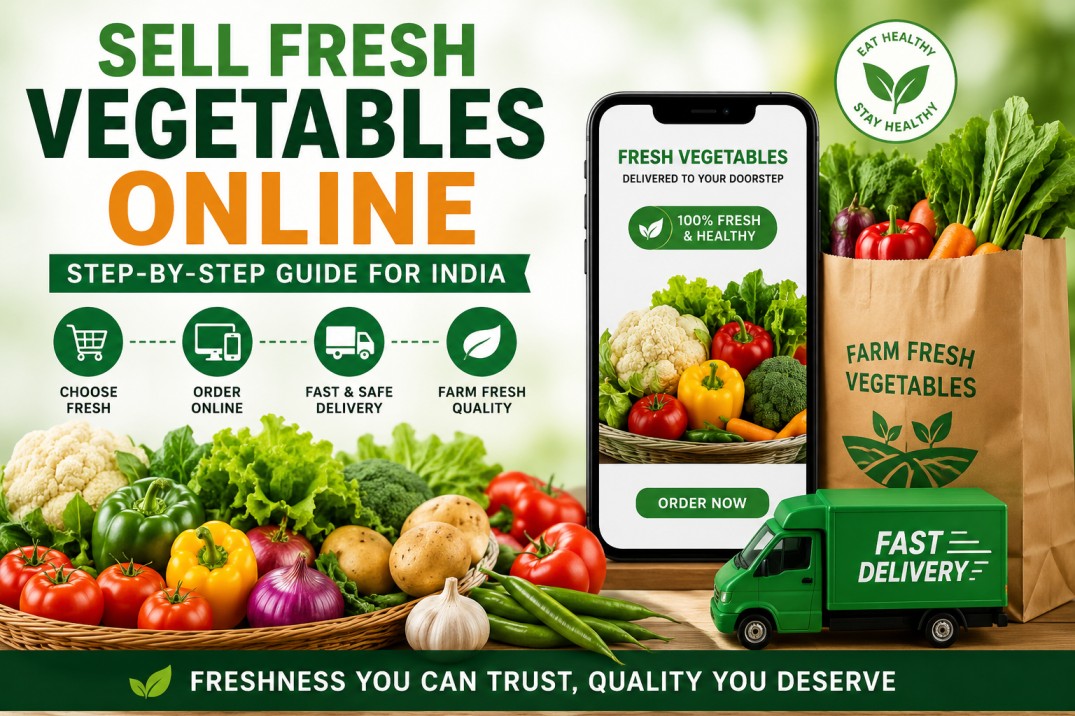
The online grocery market in India is growing rapidly. More consumers now prefer ordering fresh vegetables online because it saves time, offers convenience, and provides doorstep delivery. If you want to Sell Fresh Vegetables Online, this is an excellent opportunity to build a profitable business.
Whether you are a farmer, entrepreneur, retailer, or homemaker, starting an online vegetable business can be both rewarding and scalable. This guide explains everything you need to know, from planning and sourcing to marketing and delivery.
Understanding the Online Vegetable Market in India
India is one of the world’s largest producers of fruits and vegetables. Urban lifestyles, increasing internet usage, and digital payment systems have transformed grocery shopping habits.
The online grocery market is experiencing rapid growth due to:
- Increased smartphone usage
- Rising demand for convenience
- Expansion of digital payments
- Growth of hyperlocal delivery services
- Increased health awareness among consumers
Consumers now expect fresh produce delivered directly to their homes with minimal effort.
Why Selling Fresh Vegetables Online is a Great Business Opportunity?
Selling vegetables online offers several advantages:
Low Initial Investment
You can start with a limited inventory and gradually expand.
Growing Demand
More households prefer ordering groceries online.
Repeat Purchases
Vegetables are essential products that customers buy regularly.
Scalability
You can expand to multiple neighborhoods and cities over time.
Flexible Business Models
You can operate as a farmer, reseller, aggregator, or subscription-based service provider.
Research Your Target Customers
Before starting your business, identify your ideal customers.
Potential customer groups include:
- Working professionals
- Busy families
- Senior citizens
- Health-conscious consumers
- Restaurants and cafés
- Hostels and offices
Study your market by asking:
- Which vegetables are most in demand?
- How often do customers order?
- What prices are customers willing to pay?
- Which delivery times are preferred?
Customer research helps you to make informed business decisions.
Read: WordPress Post Templates Explained: Setup, Benefits & Examples
Create a Business Plan
A business plan serves as your roadmap.
Include the following:
| Business Element | Description | |
| Business Name | Choose a memorable brand name | |
| Products | Fresh vegetables and related grocery items | |
| Target Area | Local neighborhoods or citywide operations | |
| Budget | Startup and operating expenses | |
| Delivery Method | Own delivery or third-party services | |
| Marketing Plan | Digital and offline promotion | |
| Revenue Goals | Monthly sales targets | |
A clear plan minimizes risks and improves profitability.
Choose a Business Model
Farm-to-Consumer Model
Purchase directly from farmers and sell to consumers.
Advantages:
- Better profit margins
- Fresher produce
- Strong customer trust
Challenges:
- Requires supplier management
- Needs efficient logistics
Wholesale Reselling Model
Buy vegetables from wholesale markets and sell online.
Advantages:
- Easy to start
- Large product availability
- Lower sourcing complexity
Challenges:
- Higher competition
- Lower profit margins
Subscription Delivery Model
Customers subscribe to daily or weekly vegetable deliveries.
Advantages:
- Predictable revenue
- Higher customer retention
- Better inventory planning
Challenges:
- Requires reliable delivery schedules
- Needs consistent product quality
Legal Requirements and Registration
Starting an online vegetable business in India generally requires certain registrations.
Depending on your scale, consider:
- Business registration
- GST registration (if applicable)
- Trade license from the local authorities
- FSSAI registration for food-related operations
- Business bank account
Proper documentation increases credibility and simplifies business operations.
Find Reliable Vegetable Suppliers
Your suppliers directly affect product quality.
Possible sourcing options include:
Local Farmers
Fresh products and competitive pricing.
Wholesale Markets
Wide product variety and regular supply.
Agricultural Cooperatives
Consistent quality and organized procurement.
Direct Farm Partnerships
Long-term relationships with producers.
When selecting suppliers, evaluate:
- Product freshness
- Pricing
- Delivery reliability
- Seasonal availability
- Replacement policies
Strong supplier relationships are essential for long-term success.
Set Up Storage and Inventory Management
Fresh vegetables are perishable products.
Proper storage reduces wastage and maintains quality.
Important practices include:
- Store vegetables according to temperature requirements.
- Follow the first-in, first-out inventory method.
- Monitor stock daily.
- Purchase inventory based on demand forecasts.
- Remove damaged produce immediately.
Inventory management directly impacts profitability.
Decide Your Product Pricing
Pricing should balance profitability and competitiveness.
Consider:
- Purchase cost
- Packaging expenses
- Delivery charges
- Labor costs
- Marketing expenses
- Desired profit margin
Pricing strategies include:
Competitive Pricing
Price similarly to competitors.
Premium Pricing
Charge more for organic or farm-fresh vegetables.
Subscription Discounts
Offer lower prices for recurring customers.
Bundle Offers
Create vegetable combinations at attractive prices.
Build an Online Presence
To successfully Sell Fresh Vegetables Online, customers must easily find and order from your business.
Create a Website
Your website should include:
- Product catalog
- Prices
- Product images
- Delivery areas
- Online payment options
- Customer support information
A professional website increases trust and conversions.
Use Mobile Applications
Mobile apps offer convenience through:
- One-click ordering
- Saved addresses
- Payment integration
- Order tracking
- Push notifications
Apps improve customer retention.
Sell Through Social Media
Social platforms provide excellent growth opportunities.
Popular channels include:
- WhatsApp Business
- YouTube
Post:
- Fresh arrivals
- Customer reviews
- Discounts
- Cooking ideas
- Seasonal offers
Social media helps to build brand awareness and customer relationships.
Organize Delivery and Logistics
Delivery quality can determine customer satisfaction.
Delivery options include:
Self-Delivery
Suitable for small neighborhoods.
Dedicated Delivery Staff
Ideal for growing businesses.
Third-Party Delivery Services
Helpful for expanding operations.
Best delivery practices:
- Deliver within promised timelines.
- Use proper packaging.
- Offer flexible delivery slots.
- Communicate order status clearly.
Fast and reliable delivery encourages repeat purchases.
Read: Unlock the Power of Dedicated Servers: What Can You Host?
Develop an Effective Marketing Strategy
Marketing is essential for growth.
Effective strategies include:
Search Engine Optimization
Optimize your website for local searches.
Social Media Advertising
Promote products to nearby customers.
Referral Programs
Reward customers who bring new buyers.
Email Marketing
Send promotions and updates.
Local Partnerships
Collaborate with housing societies and offices.
Seasonal Campaigns
Offer discounts during festivals and special occasions.
Consistent marketing generates brand recognition and customer loyalty.
Build Customer Trust
Trust is critical in online food businesses.
Ways to build trust:
- Deliver fresh products consistently.
- Use transparent pricing.
- Display customer reviews.
- Offer replacement guarantees.
- Maintain responsive customer service.
- Provide secure payment methods.
Satisfied customers often become repeat buyers and recommend your business to others.
Scale Your Online Vegetable Business
Once operations stabilize, focus on growth.
Expansion opportunities include:
- Add fruits and groceries
- Introduce organic produce
- Launch subscription plans
- Expand delivery zones
- Partner with restaurants
- Develop a mobile application
- Invest in digital marketing
Scaling should occur gradually while maintaining product quality.
Common Challenges and Solutions
| Challenge | Solution |
| Vegetable spoilage | Improve inventory management |
| Delivery delays | Optimize routes and schedules |
| Customer retention | Offer subscriptions and rewards |
| Price competition | Differentiate with quality and service |
| Seasonal supply issues | Build multiple supplier relationships |
| Order fluctuations | Use demand forecasting |
Challenges are normal, but proper planning helps overcome them effectively.
Frequently Asked Questions
1. Is selling vegetables online profitable in India?
Yes. The growing demand for doorstep grocery delivery makes online vegetable businesses highly promising.
2. How much investment is required?
Investment varies depending on inventory, storage, technology, and delivery setup. Many entrepreneurs begin on a small scale and expand gradually.
3. Do I need a website to start?
No. Many businesses initially use social media and messaging applications before building dedicated websites.
4. How can I get customers quickly?
Use social media marketing, local advertising, referral programs, and promotional discounts.
5. Which vegetables sell the most online?
Potatoes, onions, tomatoes, green leafy vegetables, cucumbers, and seasonal vegetables generally experience strong demand.
6. How can I reduce wastage?
Purchase according to demand, monitor inventory daily, and maintain proper storage practices.
Conclusion
The opportunity to Sell Fresh Vegetables Online in India has never been stronger. Rising digital adoption and changing shopping habits have created a thriving market for online grocery businesses.
Success depends on understanding your customers, sourcing quality produce, maintaining efficient logistics, and delivering excellent service consistently. By starting with a clear business plan and focusing on freshness and customer satisfaction, you can build a sustainable and profitable online vegetable business in India.