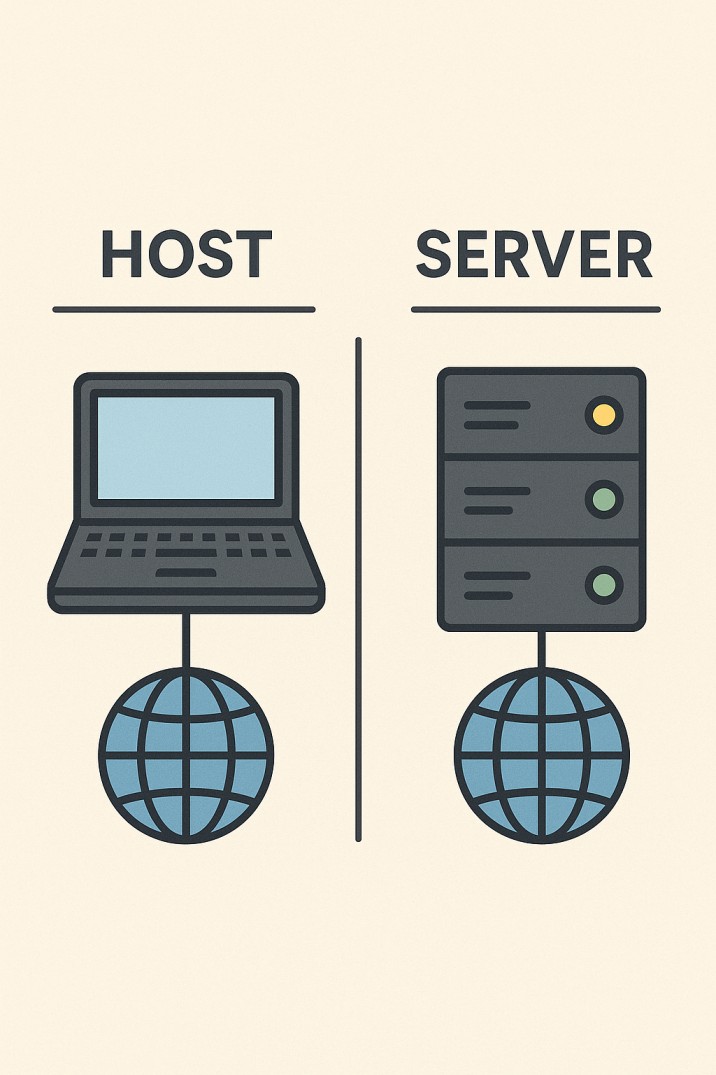
Bare-metal hosting is a cloud model in which you rent an entire physical server dedicated exclusively to your workloads—no hypervisor-level resource sharing with other tenants. Unlike shared hosting or multi-tenant virtualized environments, every CPU core, RAM module, storage drive, and network interface is allocated to a single customer.
From an infrastructure engineering standpoint, bare metal provides predictable performance, hardware-level isolation, and full administrative control—making it ideal for high-demand, compliance-sensitive, or latency-critical applications.
How Bare Metal Hosting Works
When you provision a bare metal server:
A physical machine is allocated to your account.
You choose the operating system (Linux, Windows Server, or custom images).
You control storage configuration (RAID, NVMe, SSD, HDD).
You manage networking (public/private VLANs, firewalls, load balancers).
No virtualization layer competes for CPU cycles or I/O bandwidth.
Unlike virtual machines, where resources are abstracted by a hypervisor, bare-metal servers operate directly on hardware—eliminating the overhead of shared infrastructure.
Bare Metal vs. Virtualized Hosting
| Feature |
Bare Metal Hosting |
Virtual Machine (Cloud VPS) |
| Resource Sharing |
No (single tenant) |
Yes (multi-tenant) |
| Performance Predictability |
Very High |
Variable |
| Hardware Access |
Full |
Limited |
| Hypervisor Overhead |
None |
Present |
| Ideal For |
Databases, AI/ML, Gaming, High Traffic Apps |
Web apps, SMB workloads |
For businesses running high-traffic eCommerce stores, large databases, ERP systems, or AI pipelines, bare metal reduces performance bottlenecks caused by noisy neighbors.
Key Advantages of Bare Metal Hosting
Maximum Performance
Direct hardware access means full CPU allocation, consistent disk I/O, and stable network throughput—critical for enterprise workloads.
Complete Isolation
Because no other customer shares the hardware, the risk of cross-tenant interference is eliminated.
Enhanced Security
Bare metal is often preferred in regulated industries (finance, healthcare, government) due to strict data isolation requirements.
Custom Hardware Configurations
Need 256GB RAM? Multiple NVMe drives in RAID 10? GPU acceleration? Bare metal allows tailored builds.
No Virtualization Overhead
Removing the hypervisor layer improves efficiency, particularly for database-heavy applications.
When Should You Choose Bare Metal Hosting?
Bare metal is typically recommended when:
- You experience inconsistent performance on VPS or cloud platforms.
- Your application requires high IOPS (Input/Output Operations Per Second).
- You run large-scale databases (MySQL, PostgreSQL, MongoDB).
- You need GPU-based workloads (AI/ML training).
- Compliance policies require strict hardware isolation.
- You manage high-traffic websites exceeding millions of monthly visits.
If your workload demands stable throughput rather than burstable performance, bare metal often delivers better long-term reliability.
Common Use Cases
Enterprise ERP & HRMS Systems
High-Traffic eCommerce Platforms
SaaS Applications with Large User Bases
Video Streaming & Media Processing
AI / Machine Learning Workloads
Large Database Clusters
Game Servers
These environments benefit from deterministic performance and full resource control.
Bare Metal Hosting vs. Cloud Infrastructure
Modern cloud platforms blur the line between dedicated and virtualized resources. However:
Public cloud VMs emphasize elasticity.
Bare metal emphasizes raw power and consistency.
Hybrid models combine both for flexible scaling.
Many organizations adopt a hybrid architecture, using cloud VMs for front-end scalability and bare metal for backend database stability.
Is Bare Metal Expensive?
While bare metal hosting has a higher base cost than shared hosting or entry-level VPS plans, it often delivers:
Better price-to-performance ratio for heavy workloads
Reduced downtime due to hardware-level reliability
Improved application efficiency
For compute-intensive applications, the cost savings from improved efficiency can outweigh virtualization overhead expenses.
Security & Compliance Considerations
Bare metal hosting supports:
- Dedicated firewall configurations
- Custom intrusion detection systems
- Hardware-level encryption
- Private networking setups
- Compliance with standards like PCI-DSS and HIPAA (depending on provider configuration)
Isolation plays a key role in risk mitigation.
Final Thoughts
Bare metal hosting is not just “a bigger server.” It is a strategic infrastructure decision designed for organizations that prioritize:
- Performance consistency
- Hardware control
- Data isolation
- Long-term scalability
If your application demands stable compute power, high disk throughput, and enterprise-grade reliability, bare metal hosting can provide the foundation required for sustainable growth.
Frequently Asked Questions (FAQ)
1
Is bare metal hosting the same as a dedicated server?
Yes. In most contexts, bare metal hosting and dedicated servers refer to the same single-tenant physical server model.
2
Can I scale bare metal servers?
Yes, but scaling typically involves provisioning additional servers or upgrading hardware rather than adjusting sliders like in cloud VMs.
3
Is bare metal better than cloud hosting?
It depends on your workload. Bare metal excels in performance stability; cloud excels in rapid elasticity.
4
Who should avoid bare metal hosting?
Small websites, early-stage startups, or low-traffic blogs may not require full physical server resources.
5
Can bare metal be used in hybrid environments?
Absolutely. Many enterprises integrate bare metal into hybrid or private cloud architectures.
Post Views: 83