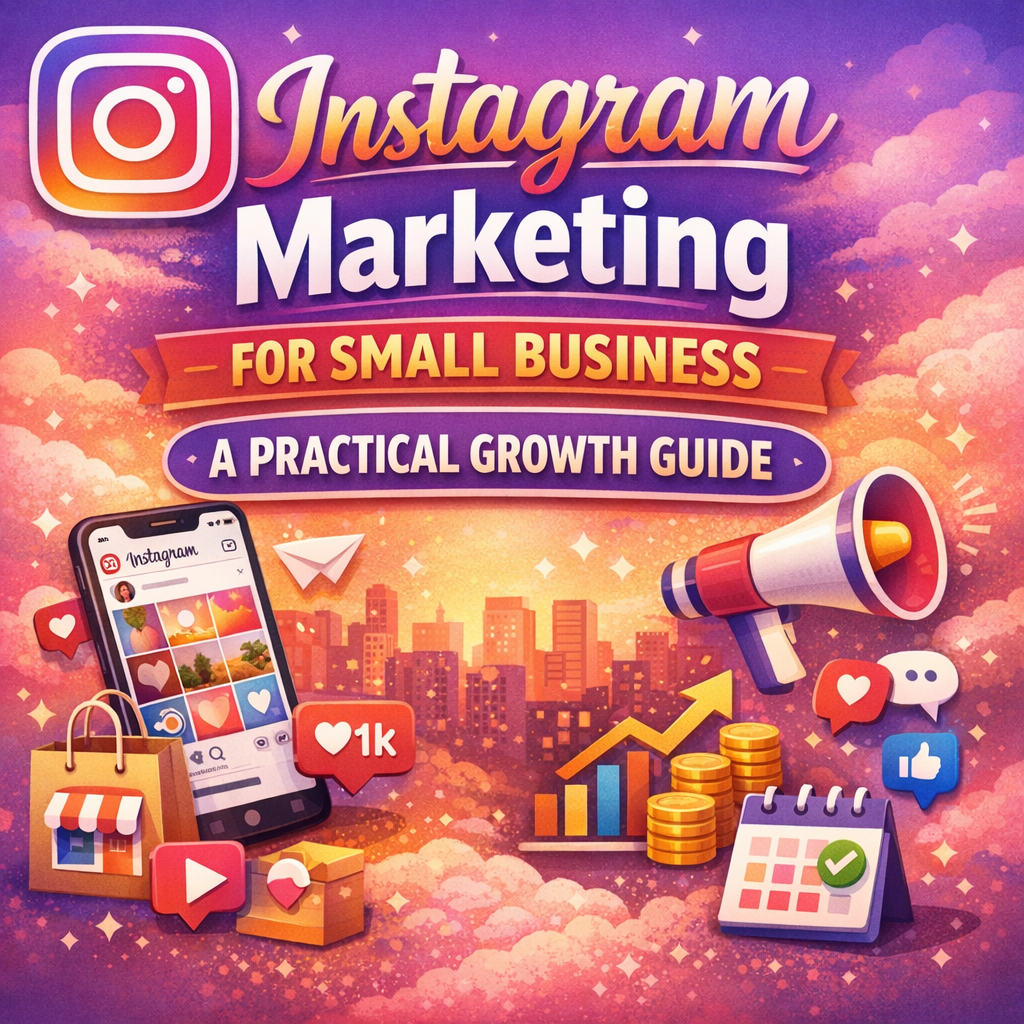
In today’s digital economy, Instagram has evolved from a photo-sharing platform into one of the most powerful marketing channels for small businesses. With over two billion active users worldwide, the platform offers entrepreneurs an opportunity to build brand awareness, connect with customers, and drive sales without requiring a massive marketing budget.
For startups, local businesses, service providers, and online brands, Instagram provides tools such as Reels, Stories, shopping features, and analytics that make it easier to reach the right audience and grow consistently. This practical guide explains how small businesses can set up Instagram correctly and use proven growth strategies to turn followers into customers.
Why Instagram Matters for Small Businesses
Instagram is highly visual and engagement-focused, making it ideal for businesses that want to showcase products, services, or brand identity. Unlike traditional advertising, Instagram allows brands to communicate directly with their audience through content, comments, and messaging.
Key advantages for small businesses include:
- High audience reach – Millions of users discover new brands every day through hashtags, Reels, and Explore pages.
- Cost-effective marketing – Organic content can generate visibility without heavy ad spending.
- Strong customer engagement – Direct messages, comments, and stories help build relationships.
- Brand storytelling – Businesses can show behind-the-scenes operations, team culture, and product journeys.
- Built-in shopping tools: Instagram allows businesses to tag products and create a seamless purchase experience.
Because of these advantages, many small brands grow their entire customer base through Instagram before expanding to other marketing channels.
Step-by-Step Instagram Setup for Small Businesses
Setting up Instagram correctly is the first step toward building a strong online presence.
1. Create a Business Account
Start by creating an Instagram account and converting it to a Professional Business Profile. This provides access to analytics, advertising tools, and contact buttons.
Benefits include:
- Insights into audience behavior
- Profile contact options (email, call, directions)
- Instagram ads and promotions
- Performance tracking for posts and reels
2. Optimize Your Profile
Your profile is the first impression visitors see. A clear and professional profile increases trust and conversions.
Essential elements include:
- Profile photo: Usually, your company logo
- Business name: Clear and searchable
- Username: Simple and brand-related
- Bio description: Explain what your business offers in one or two sentences
- Website link: Direct users to your store or landing page
Example bio structure:
Business Name | What you offer
Location or niche
Call-to-action (Shop Now / Visit Website)
3. Use Instagram Highlights
Story highlights organize important information for visitors.
Recommended highlights for small businesses:
- Products or services
- Customer testimonials
- FAQs
- Behind-the-scenes
- Offers and promotions
Read: WordPress Plugins That Impact Site Speed (And How to Fix It)
Content Strategies that drive Instagram Growth
Consistent and engaging content is the foundation of Instagram success.
1. Focus on Value-Driven Content
Instead of selling products alone, provide content that educates or inspires your audience.
Content ideas include:
- Tips and tutorials
- Industry insights
- Product demonstrations
- Customer success stories
- Behind-the-scenes business operations
Providing value increases trust and encourages followers to engage with your brand.
2. Use Reels for Maximum Reach
Instagram Reels are currently one of the fastest ways to grow organically.
Reels help businesses:
- Reach non-followers through algorithm recommendations
- Showcase products creatively
- Share quick educational tips
- Participate in trending topics
Posting Reels regularly significantly improves discoverability.
3. Maintain Consistent Posting
Consistency signals reliability to both the audience and the algorithm.
Recommended posting schedule:
- 3–4 posts per week
- 2–3 reels weekly
- Daily stories
This keeps your brand visible without overwhelming your audience.
4. Use Strategic Hashtags
Hashtags help Instagram categorize your content and show it to the right audience.
Use a mix of:
- Industry hashtags
- Local business hashtags
- Niche community hashtags
- Branded hashtags
Avoid overly generic hashtags where competition is extremely high.
Building Engagement with Your Audience
Instagram growth depends heavily on interaction and community building.
Effective engagement practices include:
- Replying to comments quickly
- Responding to direct messages
- Asking questions in captions
- Running polls and quizzes in stories
- Encouraging user-generated content
Engagement signals to Instagram that your content is valuable, increasing the chances of reaching more users.
Using Instagram Stories for Daily Interaction
Stories create real-time engagement and keep your audience connected to your brand.
Small businesses can use stories for:
- Daily updates
- Flash promotions
- Polls and feedback
- Product launches
- Customer reviews
Because stories disappear after 24 hours, they create urgency and encourage frequent interaction.
Leveraging Instagram Analytics
Instagram Insights provides valuable data that helps businesses refine their marketing strategy.
Key metrics to monitor include:
- Follower growth
- Engagement rate
- Reach and impressions
- Reel performance
- Audience demographics
Understanding these insights allows businesses to create content that resonates with their audience.
Running Instagram Ads for Faster Growth
While organic growth is important, targeted ads can accelerate business expansion.
Instagram ads help businesses:
- Reach new audiences
- Promote products or services
- Drive website traffic
- Increase brand visibility
Small businesses can start with a modest advertising budget and scale campaigns based on performance results.
Common Mistakes Small Businesses Should Avoid
Many businesses struggle on Instagram because of avoidable mistakes.
Common issues include:
- Posting only promotional content
- Ignoring audience comments or messages
- Inconsistent posting schedules
- Using irrelevant hashtags
- Not analyzing performance data
A balanced approach between value content, engagement, and promotion leads to better long-term results.
The Future of Instagram for Small Businesses
Instagram continues to evolve with new features such as AI-driven recommendations, advanced shopping tools, and creator collaborations. Businesses that adapt quickly and focus on authentic engagement will benefit the most.
Instead of treating Instagram as just another social network, successful brands view it as a complete marketing ecosystem where content, community, and commerce work together.
Read: What Is Ubuntu? A Beginner’s Guide to the Linux Operating System
Conclusion
Instagram offers small businesses a powerful platform to build brand visibility, connect with customers, and drive revenue. By setting up a professional profile, creating valuable content, engaging with followers, and using analytics to refine strategies, businesses can grow sustainably without massive marketing budgets.
Consistency, creativity, and authenticity remain the key ingredients for long-term success on Instagram.